Miceli Roofing works on residential and commercial roofs across Rhode Island, Massachusetts, Connecticut, southern Vermont and Maine. That covers a full roof replacement on a house, a flat membrane roof on a commercial building, a leak that needs finding before it does more damage, and the seasonal work in between: gutters, snow and ice, skylights, and hauling the old roof away.
Most people arrive here in one of three situations. Something is leaking and needs stopping. A roof has reached the end of its life and needs replacing. Or nothing is wrong yet and the goal is to keep it that way. The services below split along those lines.
Emergency roof repairs are for active leaks and storm damage, where the priority is stopping water getting in before anything else is decided. Repairs cover the non-urgent version: a section of damaged shingles, failed flashing, a leak that only shows in heavy rain.
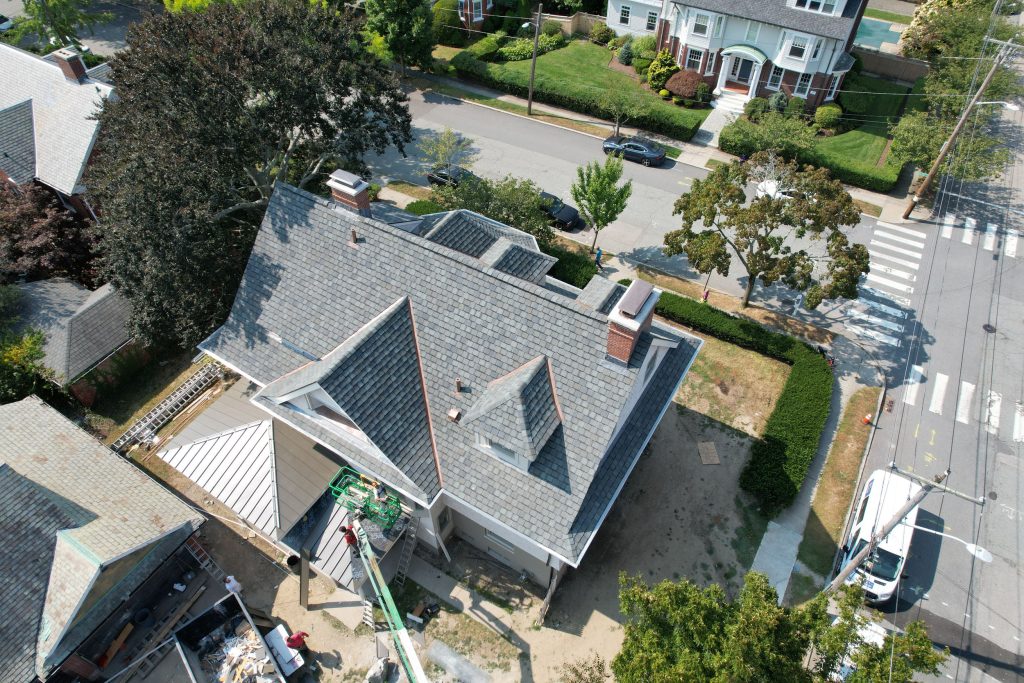
Installation is a full roof replacement, from stripping the old roof to finishing the new one. Shingles covers the material choice for pitched roofs, which is what most homes end up needing. If the building has a flat or near-flat roof, the relevant page is flat roof systems instead.
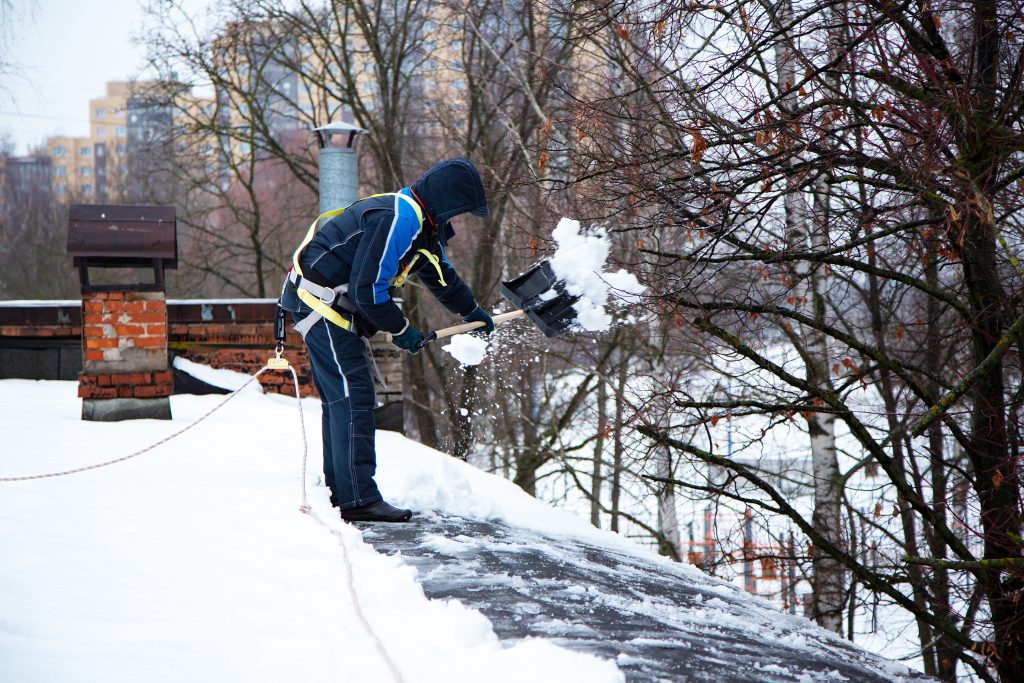
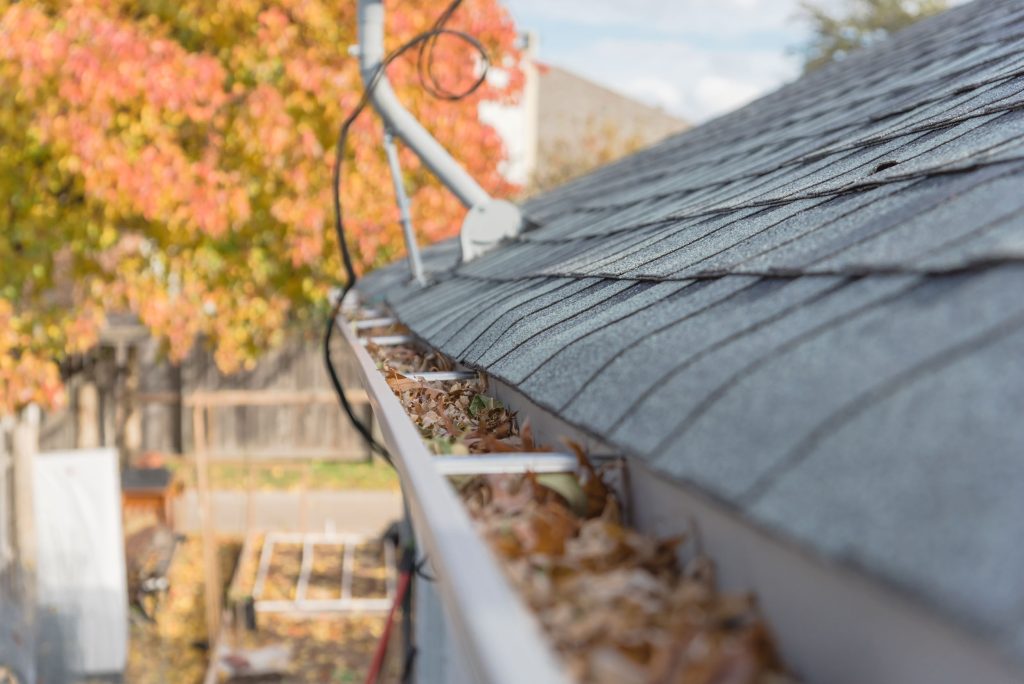
Maintenance and gutter cleaning and gutter guards deal with the things that shorten a roof's life quietly: blocked gutters backing water up under the shingles, debris holding moisture against the surface, small failures that are cheap now and expensive later. Snow and ice removal is the winter version, and it matters here because ice dams are a New England problem rather than a general one.
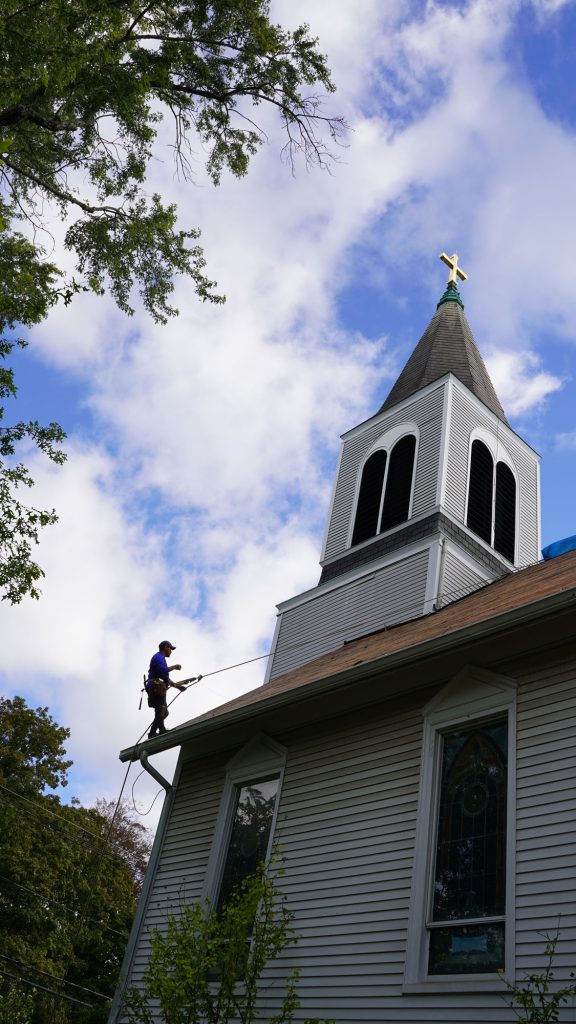
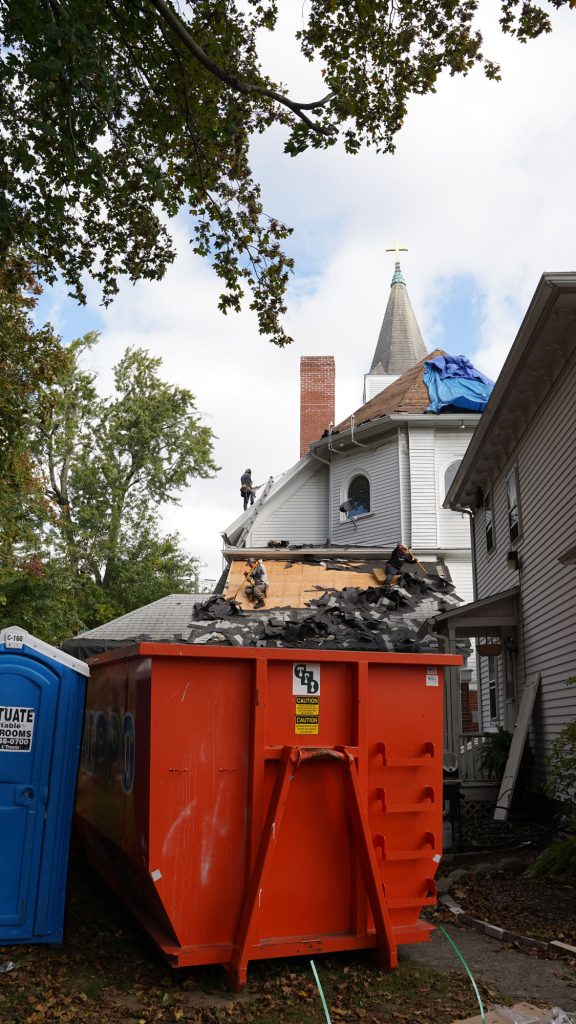
Skylights are their own job because every skylight is a hole in the roof that depends entirely on its flashing. Disposal handles removing the old roof and the debris. The roofing showroom is there for choosing materials in person, which is easier than choosing from a swatch on a screen.
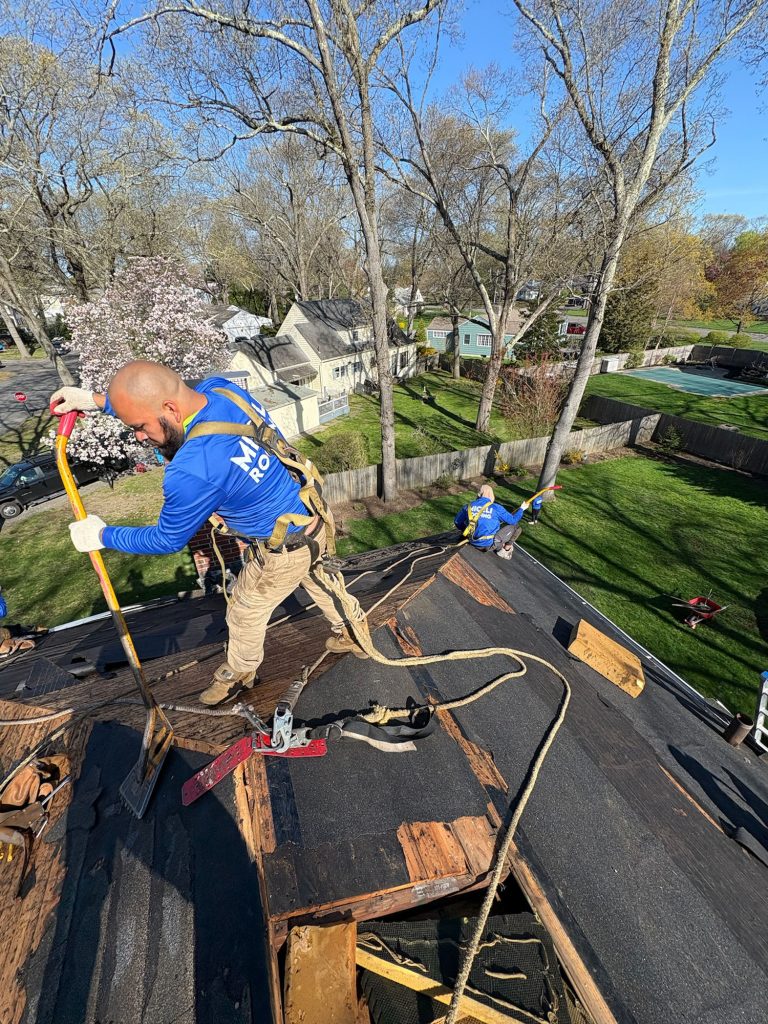
Work starts with someone looking at the roof and giving you a written estimate before anything is agreed. Once the work is scheduled, a replacement usually means the old roof comes off first, which is also the point at which the condition of the deck underneath becomes visible - if there is rot or damage under the shingles, that is when it is found and dealt with.
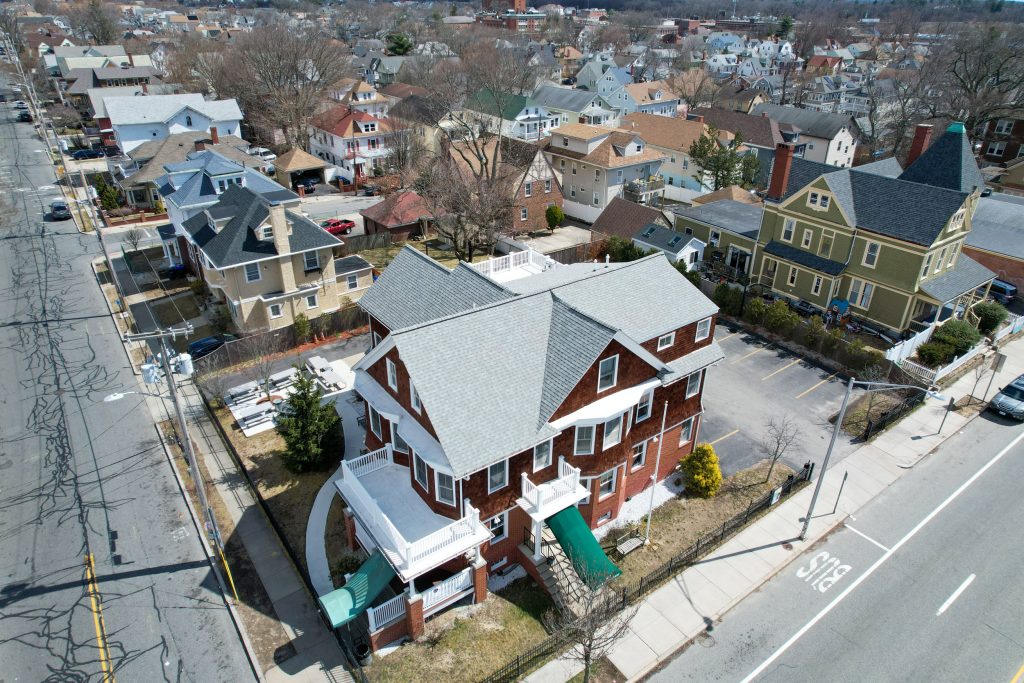
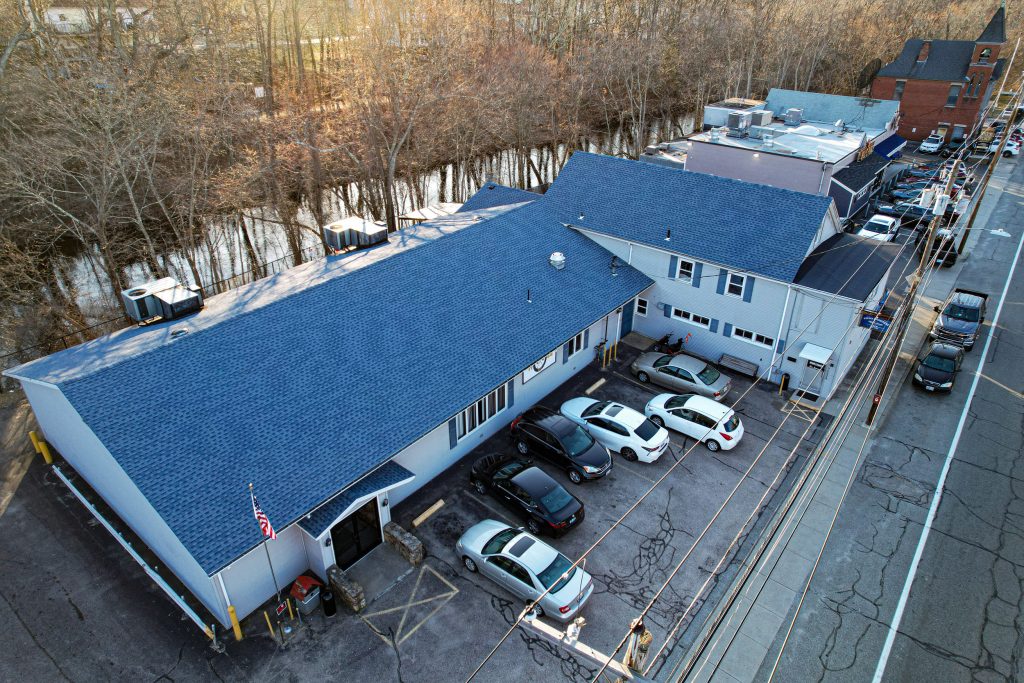
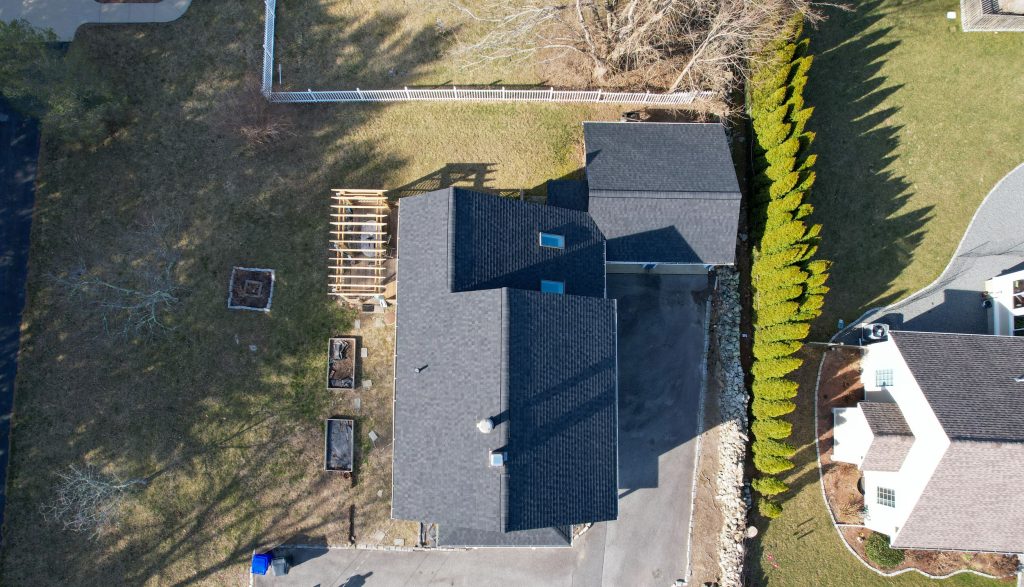
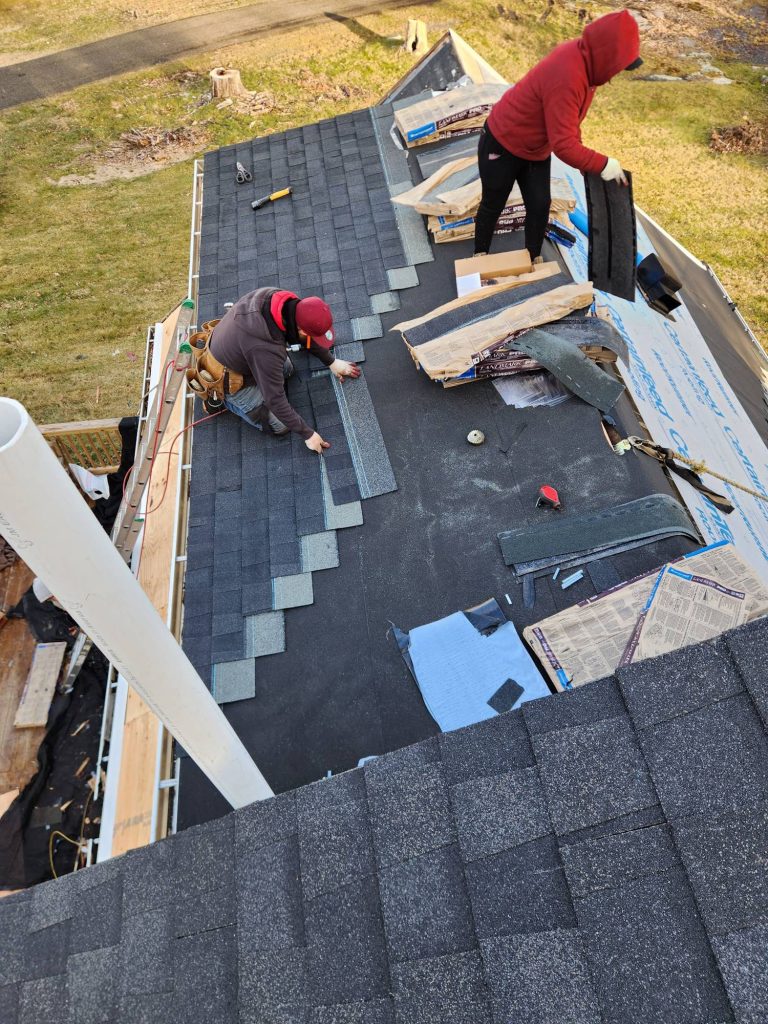
The new roof then goes on: underlayment, flashing at every penetration and junction, then the surface material. Cleanup is part of the job, not an extra. If you want a sense of the finished result, the projects page has photographs of completed work across Rhode Island.
If you are not sure which of these you need, that is a normal place to start. Ask for an estimate and describe the problem; sorting out which service applies is part of the visit.